Antiquity to Modern Era
The Zarafshan Oasis: History, Culture, and Lifeline
Centered around the Zarafshan River, this fertile oasis has served as the historic heartbeat of Central Asian civilization, fostering legendary cities like Samarkand and Bukhara.
- Geographic Core
- Zarafshan River Valley, Uzbekistan and Tajikistan
- Key Urban Centers
- Samarkand, Bukhara, Panjakent
- Historical Significance
- Major hub of the Great Silk Road, agricultural cradle, and cultural crossroad
Geographic Lifeline
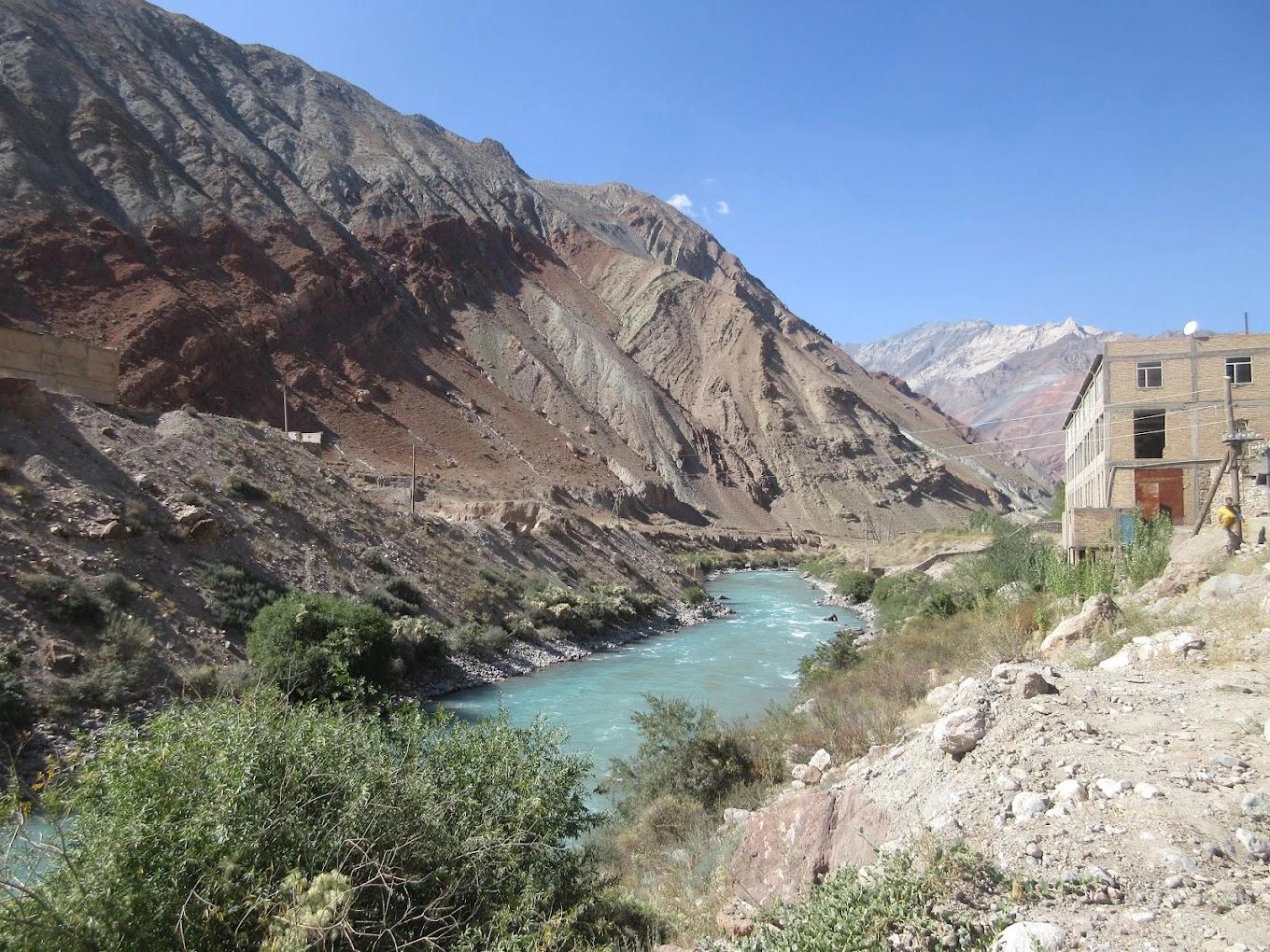
The Zarafshan River, whose name translates from Persian as 'Sprinkler of Gold' (or 'Gold-Bearing'), forms a rich and densely populated oasis nestled between the arid expanses of Central Asia. Known to ancient Greek historians as the Polytimetus ("much-honored" or "coveted"), the river originates in the high-altitude Zarafshan Glacier within the Pamir-Alay mountain system in Tajikistan. Stretching approximately 877 kilometers, it flows westward through rocky gorges before entering the fertile valley, eventually dividing near Samarkand into northern and southern branches (Akdarya and Karadarya) and finally losing its remaining waters in the sands of the Kyzylkum Desert near the Karakul oasis.
For millennia, the survival of civilization in this valley depended on human ingenuity in mastering the water flow. Ancient Sogdian communities and subsequent empires constructed sophisticated networks of irrigation canals - such as the historic Dargom, Narpai, and modern hydraulic nodes like Ravatkhodja and Damkhodja - that channeled the river's glacial meltwater across the arid valley floors. These monumental engineering systems transformed harsh semi-deserts into highly productive agricultural cradles, capable of sustaining legendary imperial capitals like Samarkand and Bukhara, as well as supporting millions of inhabitants across one of Central Asia's most vital historic crossroads.
Civilization and the Silk Road
The Zarafshan oasis has been inhabited for over two and a half millennia. In antiquity, it formed the heartland of Sogdiana, a vibrant Iranian civilization known for its mastery of commerce, diplomacy, and crafts. Ancient Panjakent and the early layers of Samarkand (Afrasiab) demonstrate a high level of urban planning and a unique syncretic pantheon of deities.
As the Great Silk Road developed, cities situated within the oasis—most notably Samarkand and Bukhara—became pivotal nodes connecting China, Persia, India, and Europe. Caravans brought not only silk, spices, and porcelain, but also advanced papermaking technologies (Samarkand became the center of paper production in the Islamic world), glassmaking, and ceramics.
Cultural and Scientific Flourishing
The confluence of diverse populations, ethnic groups, and religious currents over centuries turned the oasis into a melting pot of civilizations. Islamic golden ages, particularly under the Samanids and later the Timurids, left behind an architectural legacy of world-renowned mosques, madrasas, and mausoleums decorated with complex majolica.
Beyond monumental architecture, the oasis preserved unique traditions in craftsmanship, music including the Shashmaqom classical cycle, and profound scholarship. Great thinkers of the East lived and worked here, including the polymath Avicenna (Ibn Sina), the astronomer Ulugh Beg, the mathematician Al-Khwarizmi, and many others who laid the foundations of modern science.
Craft Heritage and Traditions
The economic and cultural prosperity of the Zarafshan oasis has historically relied on the extraordinary mastery of its local artisans. Situated at the crossroads of the Great Silk Road, key centers like Samarkand and Bukhara evolved into legendary hubs of applied arts. For centuries, the secrets of craftsmanship were perfected and passed down through generations within tight-knit family guilds following the traditional ustaz-shogird (master-apprentice) system.
Textile arts represent one of the crown jewels of this heritage. Bukhara became globally renowned for its opulent gold-embroidery (zarduzi), which was traditionally used to adorn royal garments, as well as its exquisite ikat-dyed silk fabrics (atlas and adras). Meanwhile, Samarkand mastered the production of heavy, shimmering velvet and hand-knotted carpets featuring intricate geometric and floral Persian motifs.
Ceramics within the oasis developed distinct regional styles, most notably the Gijduvan and Samarkand schools. Gijduvan ceramics are celebrated for their warm, earthy green and brown glazes achieved through natural mineral pigments. In contrast, Samarkand masters favor deep cobalt blues and turquoise patterns that reflect the vast Central Asian skies and the tilework of local historic monuments.
Metallurgy, wood carving, and paper-making further defined the region's material culture. Artisans crafted fine chased copper and brass tableware, and intricately carved walnut architectural panels. Additionally, the region witnessed the revival of the ancient Koni Gil art of making durable mulberry paper. Culinary craftsmanship - such as baking iconic Samarkand flatbreads in traditional clay tandirs - also remains a revered cultural practice, ensuring that these living traditions continue to thrive and captivate travelers worldwide.
Ecology and Modern Condition
In the modern era, the Zarafshan oasis faces multifaceted environmental challenges driven by climate change and intensive economic activity. The basin of the Zarafshan River—which originates in the high-altitude glaciers of the Pamir-Alay and Zarafshan ranges in Tajikistan—has experienced significant alterations in its hydrological cycle. Scientific data shows a continuous shrinkage of glacier areas in the region (for instance, a notable loss of over 11% in surface area over recent decades), reducing the long-term natural freshwater reserves that feed the valley.
Furthermore, heavy water abstraction for extensive cotton and grain irrigation systems creates a severe deficit in water resources, particularly in the lower reaches of the river within Uzbekistan. The transboundary nature of the river basin—spanning both Tajikistan and Uzbekistan—requires delicate intergovernmental coordination for equitable water allocation, management of hydro-technical structures (such as the Ravatkhodja and Damkhodja nodes), and mitigation of return-water pollution.
Nevertheless, the region remains an agricultural powerhouse and the historical "breadbasket" of Central Asia. To counteract ecological degradation, local authorities and international organizations are actively advancing sustainable agriculture practices, modernizing irrigation networks, and promoting ecotourism. Comprehensive UNESCO heritage preservation programs in Samarkand and Bukhara also help balance ecological management with the safeguarding of cultural landscapes, ensuring that this vital river valley can sustain both its population and its priceless heritage into the future
Sources
- UNESCO World Heritage Centre: Samarkand — Crossroad of Cultures
- Encyclopaedia Iranica: Zarafshan Valley
- Barthold, V.V. Turkestan Down to the Mongol Invasion
- Stark, S. The Sogdian-Turkish Interdependence in the 6th–8th Centuries
- Central Asia Climate Information Portal (CACIP): The Zarafshan Glacier has shrunk by 11.7% in 32 years
- Hydrosolutions & Research Data: The Water Crisis in the Zarafshan River Basin (Remote Sensing Supported Water Resources Management)
- ZOI Environment Network: Zarafshan National Park: Challenges and Solutions
- CAWater-Info: Water resources of Zeravshan River basin