6th century BCE — 8th century CE
Sogdiana: a land of cities and intermediaries
Sogdiana joined the Zarafshan and Kashkadarya oases. Its cities and merchants connected the steppe, Iran, India and China.
- Centres
- Samarkand, Bukhara, Kesh, Paykend
- Language
- Sogdian, Eastern Iranian group
- Evidence
- Archaeology, coins, inscriptions, Chinese chronicles
The oases of Sogdiana
Historical Sogdiana lay chiefly in the Zarafshan and Kashkadarya valleys. Its boundaries shifted, while its cities and principalities retained their own dynasties and interests.
Sogd appears in Avestan tradition, Achaemenid inscriptions and Greek works. Under the Achaemenids it was linked with Bactria and integrated into the imperial system.
Trading networks
Sogdian merchants did not ‘create’ the Silk Road, but became major intermediaries across early medieval Eurasia. Their communities existed far east of Samarkand.
Trade was only one part of the economy. Agriculture, irrigation, crafts and exchange with the nomadic world sustained oasis life.
Afrasiab and the Hall of Ambassadors
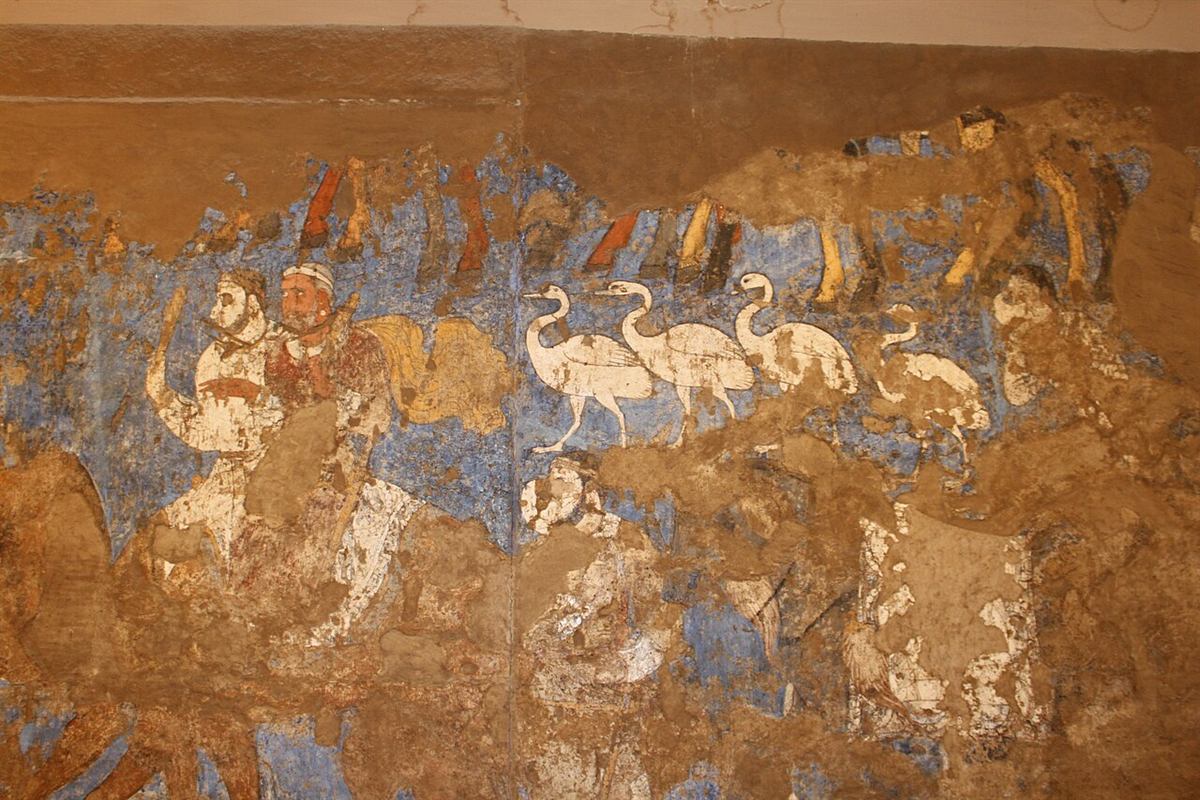
Afrasiab preserves layers of ancient Samarkand down to the Mongol conquest. Seventh-century murals depict embassies, ceremonies and distant lands; an inscription names the ruler Varkhuman.
The images are valuable evidence of diplomacy and elite ideas, but they are not photographic reports: their composition served a political programme.
Conquest and cultural change
The Arab conquest was not a single event. Campaigns, treaties, rebellions and changing local alliances stretched the transition across decades.
Sogdian language and urban traditions did not vanish at once. Institutions and crafts continued within a new political and religious environment.