819–999 CE
The Samanid State: The Rise of Transoxiana under Bukhara (819–999)
The Samanids established relatively autonomous rule across eastern Iran and present-day Uzbekistan. Bukhara became the capital and, with Samarkand, a cultural centre; New Persian, commerce, and Iranian Islamic culture flourished.
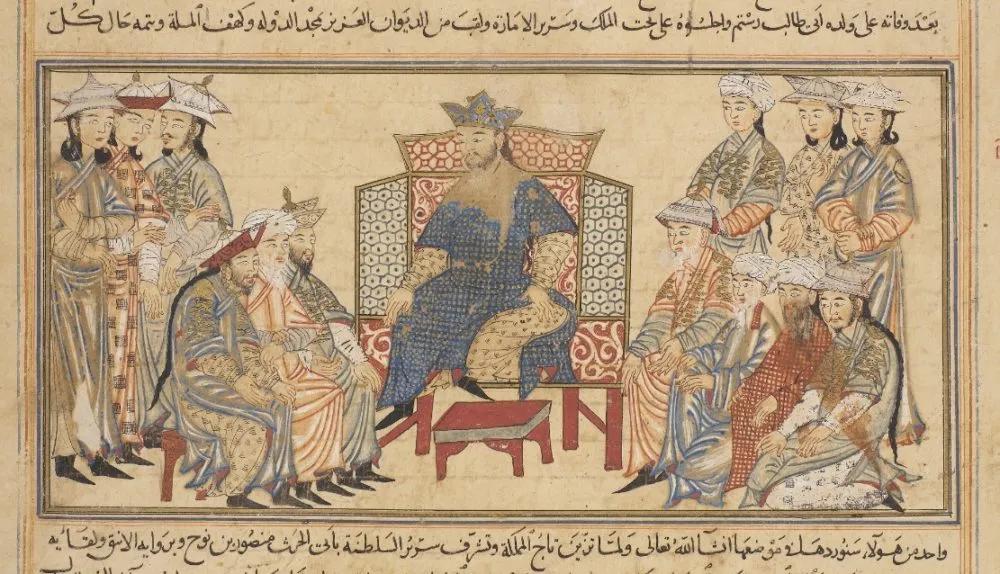
- Period
- 819–999 CE
- Political centre
- Bukhara; relatively autonomous rule over Transoxania and Khorasan
- Cultural development
- New Persian literature, philosophy, and historical writing flourished
- Architectural legacy
- The Ismail Samani mausoleum, a masterpiece of 10th-century Muslim architecture
Formation and territory
The Samanids were an Iranian dynasty that ruled from 819 to 999 CE. Britannica identifies Sāmān-Khodā as the founder and explains that his four grandsons were rewarded with provinces for faithful service to the Abbasid caliph al-Maʾmūn.
Those appointments included Samarkand, Fergana, Shāsh, and Herāt. The Samanids later established relatively autonomous rule in a region corresponding to eastern Iran and present-day Uzbekistan, governing Transoxania and Khorasan with Bukhara as their capital.
Bukhara and the urban world
Bukhara became the political and cultural centre of the Samanid state. Britannica records that Transoxania and Khorasan prospered, industry and commerce expanded, and Bukhara and Samarkand became cultural centres.
Iranica describes Sogdiana as an Iranian-speaking region between the Amu Darya and Syr Darya, with its heart in the valleys of the Zarafshan and Kashka Darya. After the ninth century, the name Sogd was restricted to the countryside between Samarkand and Bukhara, clarifying the historical setting of the Samanid urban and rural world.
Language, learning, and Iranian Islamic culture
The Samanids fostered Iranian national sentiment and learning. Britannica associates their rule with the rise of New Persian, the flourishing of Persian literature, and the encouragement of philosophy and history, developments that helped lay the foundations of Iranian Islamic culture.
According to Iranica, conditions in Sogdiana finally stabilized in the ninth century after the Arab conquest, later revolts, the revolt of Rāfeʿ ibn Layṯ at Samarkand, and the enlistment of Sogdian aristocrats into caliphal service. In the Samanid period elite culture returned to a shared East Iranian stock, while Sogdian identity gradually merged with the Persian-speaking Islamic world.
Architectural legacy and historical significance
The Ismail Samani mausoleum in Bukhara is the clearest surviving material expression of the dynasty’s legacy. UNESCO calls it a masterpiece of 10th-century Muslim architecture and the best surviving example of 10th-century architecture in the Muslim world.
UNESCO describes Bukhara as a Silk Roads city more than two thousand years old whose medieval urban fabric has remained largely intact. Although the Samanid state ended with the fall of Bukhara in 999, the cityscape and mausoleum remain important evidence of the political and cultural rise of the tenth century.
Ismail Samani and the consolidation of power
Ismail ibn Ahmad was sent to Bukhara by his elder brother Nasr in 874, when the city was experiencing political instability. After rivalry between the brothers, Ismail maintained Nasr’s formal seniority until his death in 892 and then became the leading Samanid ruler. Bukhara gradually emerged as the centre of dynastic government.
In 900 Ismail defeated the Saffarid ruler Amr ibn al-Layth and consolidated Samanid authority over Khorasan. The victory strengthened the dynasty’s standing: while acknowledging the Abbasid caliph’s nominal supremacy, its rulers pursued a largely autonomous regional policy. Ismail’s reign (892–907) was a decisive stage in the consolidation of the state.
Amirs, viziers, and government
The Samanid amir relied on a court administration, viziers, officials, and military commanders. Governing extensive territories required appointments of provincial governors, revenue collection, and security along trade routes. The Bukharan court connected the provinces of Transoxania and Khorasan, although effective control varied across the realm.
The dynasty maintained symbolic ties to the Abbasid caliphate without surrendering practical autonomy. During the tenth century powerful military commanders, including men from Turkic military backgrounds, gained increasing influence. The central government’s dependence on these elites later complicated political stability.
Bukhara under Nasr II and cultural flourishing
Under Amir Nasr II (914–943), the court at Bukhara was an important centre of literature and learning. The Samanid period is closely associated with the poet Rudaki, whose work helped shape court poetry in New Persian. Arabic nonetheless remained a major language of theology and scholarly writing.
Cultural change was not limited to a single language or to the court: scribes, religious scholars, and intellectuals worked across the cities, alongside local educational traditions. Patronage of New Persian literature made the Samanid legacy particularly influential in the later cultural histories of Iran and Central Asia.
Trade, crafts, and silver dirhams
The state’s economy rested on irrigated agricultural oases, craft production, and urban markets. Bukhara and Samarkand participated in trade routes connecting Khorasan, the steppe, and other parts of the Islamic world. The scale and character of commerce varied with political conditions and the state of monetary circulation.
Samanid silver dirhams occur in hoards far beyond Central Asia, including eastern and northern Europe. Numismatic scholarship highlights the particular importance of the Samarkand mint in tenth-century exchange. The finds show the reach of commercial networks but do not in themselves establish that merchants from Bukhara travelled directly to every place where the coins were discovered.
Islam, education, and historical memory
Samanid rulers presented themselves as Muslim amirs and supported religious institutions and scholarship. Bukhara was an important centre of Islamic learning, within wider Transoxanian traditions of hadith and jurisprudence. The renowned hadith compiler al-Bukhari (810–870) lived before Bukhara became the Samanid capital and should not be described as a scholar of the Samanid court.
A key source for the city’s past is Narshakhi’s History of Bukhara, composed in the tenth century and preserved in a later Persian reworking. Like other medieval narrative sources, it needs to be read alongside archaeological, numismatic, and external evidence: its contents reflect both its genre and the transmission of its text.
Military rivalries and dynastic decline
In the second half of the tenth century, court struggles, rival commanders, and difficulties governing Khorasan undermined Samanid stability. In the south, the rulers of Ghazna rose out of the Samanid military system, while pressure from the Qarakhanids increased to the northeast. These developments steadily diminished the Bukharan amirs’ control of the realm.
In 992 the Qarakhanid ruler Bughra Khan briefly occupied Bukhara. Although Samanid authority was subsequently restored, the crisis persisted: commanders increasingly shaped succession, and the contest for Khorasan further weakened the dynasty. The fall of 999 thus concluded a prolonged period of erosion rather than a sudden collapse.
The fall of Bukhara in 999 and the legacy
In October 999 the Qarakhanid Ilig Nasr ibn Ali occupied Bukhara and the Samanid amir Abd al-Malik II was deposed. Transoxania passed to the Qarakhanids, while Khorasan came under Mahmud of Ghazna. A Samanid prince, Ismail al-Muntasir, continued unsuccessful efforts to restore dynastic rule into the early eleventh century.
The Samanids’ importance extended beyond their political boundaries: patterns of literary patronage, urban culture, and monetary exchange survived dynastic change. At the same time, their world should be understood as a multilingual, socially diverse regional history rather than a direct equivalent of any modern nation-state.
Sources
- Encyclopaedia Britannica — Samanid dynasty
- UNESCO World Heritage Centre — Historic Centre of Bukhara
- Encyclopaedia Iranica — Sogdiana iii. History and Archaeology
- Encyclopaedia Iranica — Bukhara ii. From the Arab Invasions to the Mongols
- Encyclopaedia Iranica — Khorasan vi. Taherid and Samanid Periods
- Encyclopaedia Iranica — Abd-al-Malek b. Nuh (r. 999)
- Roman K. Kovalev — Dirham Mint Output of Samanid Samarqand (Histoire & mesure)
- Encyclopaedia Iranica — Mansur b. Nuh