Early Middle Ages – until the 12th century
Poykent: The Forgotten Trading City of the Bukhara Oasis
How did ancient Poykent near Bukhara become a center of caravan trade and craftsmanship? Explore the city’s history, archaeological discoveries, and decline.
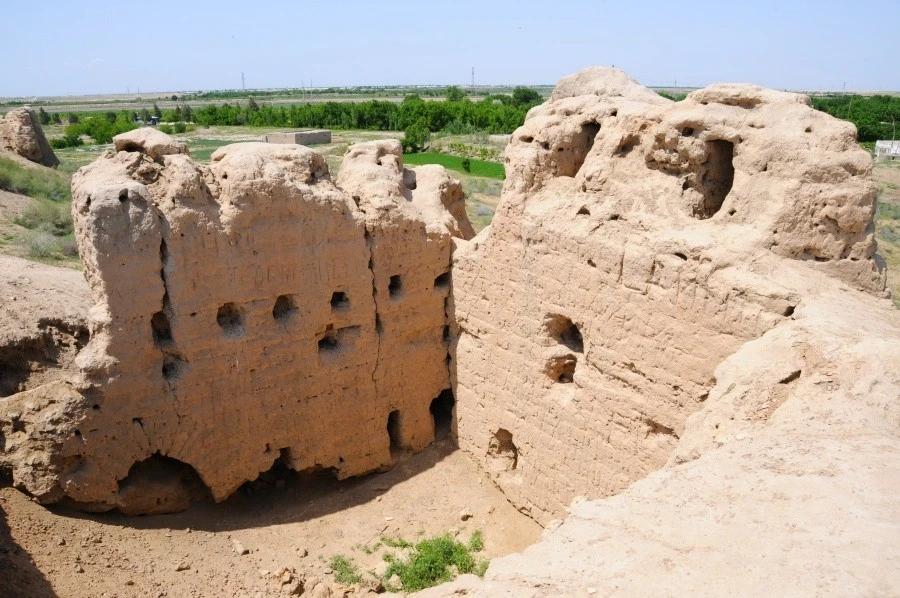
- Location
- Bukhara Region, southwestern Bukhara Oasis
- Alternative names
- Paykend, Poykand, Baykand (spellings found in historical sources)
- Historical region
- Sogdia and the Bukhara Oasis
- Known for
- Caravan trade, craftsmanship, and a fortified urban center
- Present condition
- Archaeological site
Introduction
Poykent (Paykend) holds a distinctive place in the history of the Bukhara Oasis. Although it survives today as ruins, it was once an important city visited by merchants, craftspeople, and travelers.
The history of Poykent shows that cities developed not only as political centers but also through trade routes, water supplies, and local production.
Where Is Poykent Located?
The Poykent archaeological site lies in present-day Bukhara Region, in the southwestern part of the Bukhara Oasis. In antiquity, this area was connected to oasis canals and caravan routes and developed where desert lands met irrigated fields.
Historical literature records the city’s name in forms such as Paykend, Poykand, and Baykand. These different spellings may refer to the same historical center rather than separate cities.
Origins of the City
The earliest phases of Poykent are studied through archaeological layers. Its development was linked to the expansion of settled agriculture, fortifications, and commercial contacts in the Bukhara Oasis.
The city did not emerge overnight: its defensive structures, homes, and craft areas changed over different periods. It is therefore misleading to assign its foundation to a single exact year.
A City of Caravans and Merchants
Poykent’s reputation was closely tied to commerce. Routes passing through the Bukhara Oasis connected local markets with distant regions. Caravans carried not only goods but also knowledge, technologies, and cultural traditions.
Medieval Arabic and Persian geographical works mention Baykand as a trading city. However, its importance should not be assumed to have remained constant: routes and political conditions changed over time.
Urban Layout and Defenses
Archaeological research has identified fortified areas, dwellings, streets, and traces of economic activity in Poykent. Its urban layout reflects the connections between security, trade, and everyday needs.
Fortress walls and gates also reveal the defensive role of a city located on trading routes. When interpreting finds, it is important to distinguish the construction phase to which each belongs.
Craftsmanship and Everyday Life
Pottery, metal objects, coins, and other material evidence found at Poykent offer insights into the lives of its inhabitants. They help researchers study production, exchange, and patterns of consumption.
An archaeological object alone does not always reveal who owned it. Historians therefore consider where it was found, its date, and its relationship to other materials.
Poykent During the Arab Conquest
In the early eighth century, the Bukhara Oasis became a theater of campaigns by Arab armies. Medieval historical narratives associate the conquest of Baykand with the campaigns of Qutayba ibn Muslim.
Written sources describe events from the perspective of their authors and their times. Details of battles and certain dates must therefore be compared with archaeological evidence and other texts.
The City in the Islamic Period
After the Arab conquest, the oasis underwent political and religious changes. Poykent continued to function within new commercial and administrative systems.
Layers dating to the Islamic period show that urban life did not suddenly cease. The scale of neighborhoods and economic activity may have varied over time.
Why Did Poykent Decline?
Poykent’s decline cannot adequately be explained by a single war or disaster. Historical scholarship discusses factors such as water supply, changing trade routes, and the growing importance of other centers in the oasis.
Some studies associate the decline of urban life with later phases of the Middle Ages. Conclusions about precise causes and chronology should be drawn cautiously from excavated layers and written sources.
What Have Archaeologists Discovered?
Excavations at Poykent have made it possible to study the city plan, its defenses, traces of craftsmanship, and material culture. Each discovery helps reconstruct a particular aspect of urban life.
As archaeological research continues, earlier interpretations may be revised. Maps and chronologies of Poykent should therefore be understood as scholarly reconstructions.
Significance Today
The ruins of Poykent remind us that the history of Bukhara extends beyond its famous architectural monuments. This site offers a way to study the history of oasis trade, urban planning, and everyday life together.
Comparing Poykent with Bukhara, Varakhsha, and other oasis centers helps illuminate the region’s long-standing economic and cultural connections.
Conclusion
Poykent is one of the lesser-known but important historic cities of the Bukhara Oasis. Its development depended on trade, craftsmanship, and an urban environment supplied with water.
Today, studying Poykent brings written history and archaeological evidence together, helping us understand the complex fortunes of ancient cities in Central Asia.