Documented in the 19th–20th centuries; origins uncertain
Masxarabozlik: The History of Uzbek Folk Spectacular Arts
Masxarabozlik is a traditional Uzbek performing art centered on live comic acting, imitation, satire, and improvisation. Its possible ancient roots are discussed in heritage descriptions, but no securely established date of origin is available.
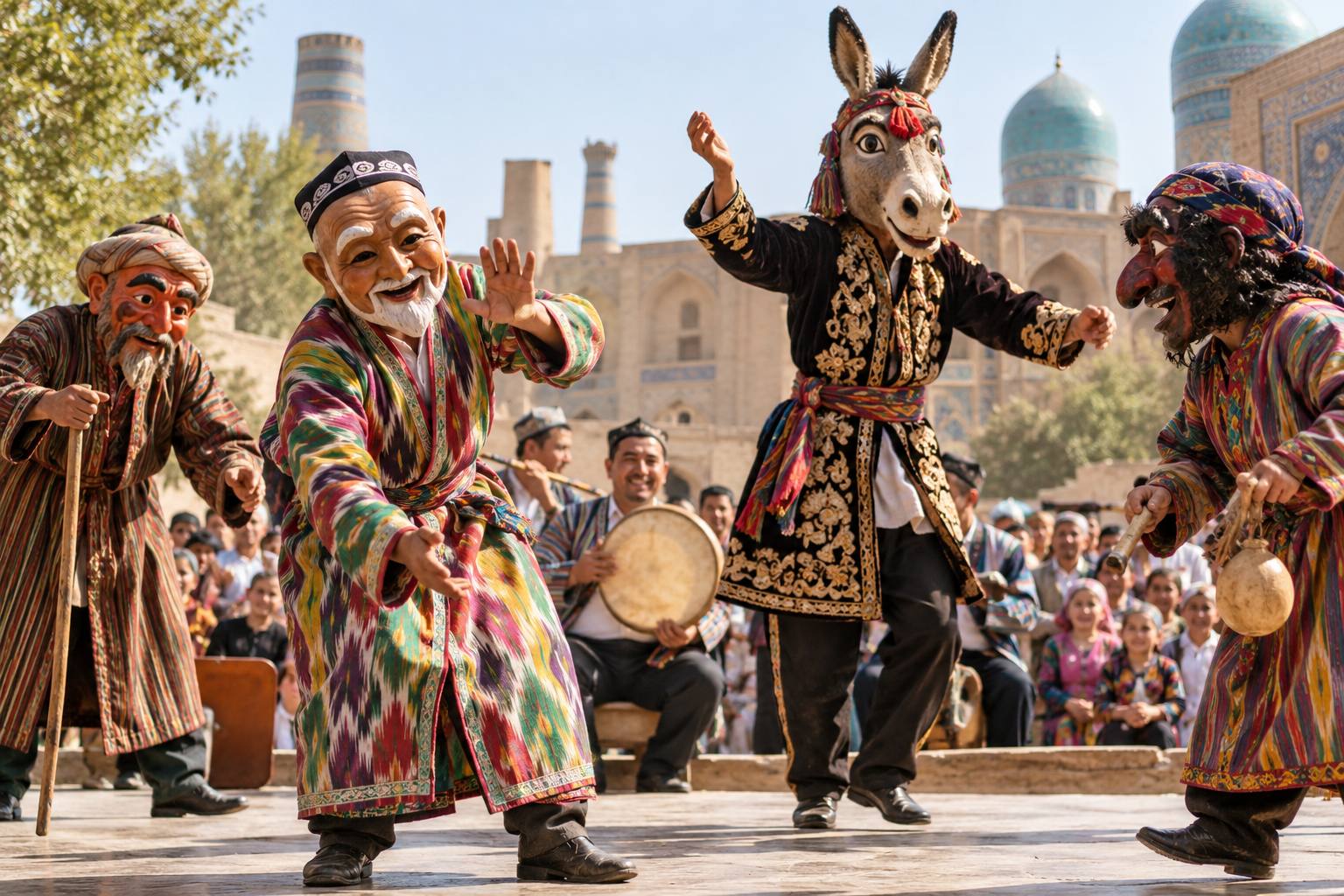
- Heritage classification
- Listed as performing art no. 02.06.03 in Uzbekistan’s national intangible cultural heritage inventory.
- Performance techniques
- Masks, imitation, improvisation, comic characterization, and satire.
- Documentary record
- Much of the surviving written evidence about maskharaboz theatre dates to the nineteenth century.
- Later developments
- Performances with rope walkers and strongmen, and a shift from masks to makeup, are noted around the turn of the twentieth century.
What is masxarabozlik?
Uzbekistan’s intangible cultural heritage inventory defines maskharabozlik as a form of traditional spectacle. The performer creates comic characters through masking, gesture, imitation and live acting.
In a 2011 scholarly article, Hüseyin Baydemir describes masxaraboz–qiziqchi drama as one branch of traditional Uzbek theatre, distinct from puppetry because the characters are enacted by live performers.
Performance and repertoire
The heritage inventory names performances such as “Sadr,” “Ashshadaroz,” and “Maskharaboz.” It highlights oral dramatic composition, improvisation and satirical portrayals of everyday life.
Performers appeared at communal celebrations, festivals and ceremonies. Comic sketches could portray personal failings and social relations through humor.
The historical record
The heritage description suggests that masked rituals may be among the genre’s distant antecedents. This does not establish a specific ancient date for the later theatrical tradition.
An article in San’at magazine notes that written references to maskharaboz theatre mostly date from the nineteenth century, while evidence for earlier periods is scarce.
Relations with other traditions
Maskharabozlik shares historical connections with puppetry. Around the turn of the nineteenth and twentieth centuries, performances were staged alongside rope walkers, acrobats and strongmen.
The heritage inventory describes a subsequent move from masks toward makeup and distinctive costumes. Claims of direct continuity into any particular modern production require their own documentary support.